PoE2 Ascendancy Complete Guide — All 22 Classes Ranked & Explained
All 8 PoE2 base classes and 22 ascendancies explained: Table of Ascension unlocks, meta tier list, key notables and league-start recommendations.
PoE2 Ascendancy Complete Guide — All 22 Classes Ranked & Explained
Path of Exile 2’s Early Access has grown enormously since launch. As of patch 0.5 “Return of the Ancients” and the Runes of Aldur league, the game features 8 base classes and 22 ascendancies — with Grinding Gear Games targeting 12 classes and 36 ascendancies at 1.0. Two brand-new ascendancies, Spirit Walker and Martial Artist, have rocketed straight to S-tier, reshaping the league-start meta alongside long-standing staples like Deadeye and Invoker.
This poe2 ascendancy guide breaks down every class, every specialization path, the Table of Ascension system, and our current meta rankings so you can pick the right ascendancy for your playstyle — whether you’re launching a new league character or theorycrafting your next endgame build.
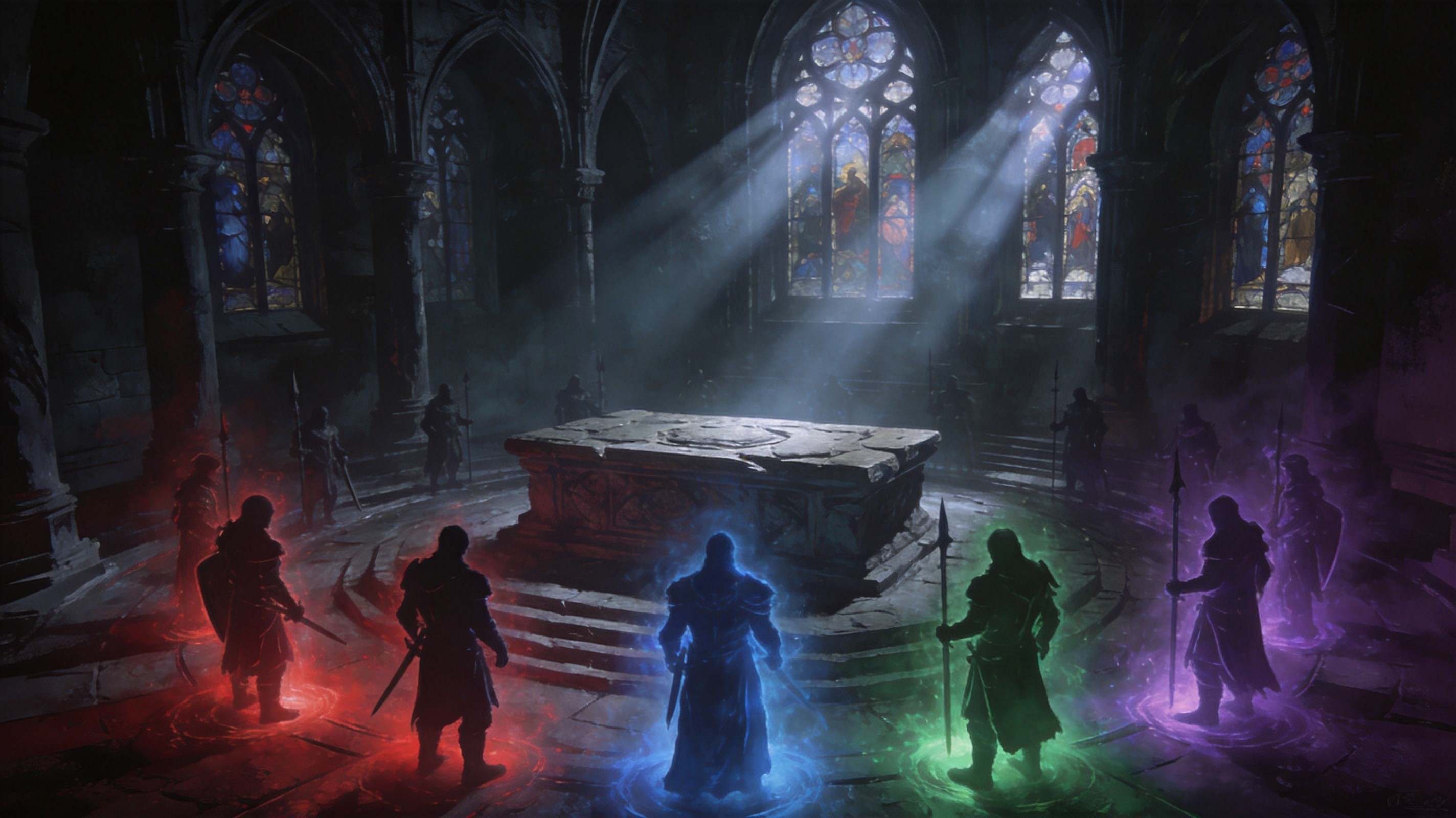
All 8 Base Classes & Their Ascendancies at a Glance
Each class offers 2–3 ascendancy paths, with new paths arriving in major patches. Here’s the full roster:
| Class | Attribute | Weapon Theme | Ascendancies |
|---|---|---|---|
| Warrior | Strength | Maces / Swords | Warbringer, Titan, Smith of Kitava |
| Witch | Intelligence | Staves / Wands | Infernalist, Blood Mage, Lich |
| Ranger | Dexterity | Bows | Deadeye, Pathfinder |
| Monk | Dex / Int | Quarterstaves / Unarmed | Invoker, Acolyte of Chayula, Martial Artist |
| Sorceress | Intelligence | Staves / Wands | Stormweaver, Chronomancer, Disciple of Varashta |
| Huntress | Dexterity | Spears / Bucklers | Amazon, Ritualist, Spirit Walker |
| Mercenary | Str / Dex | Crossbows | Witchhunter, Gemling Legionnaire, Tactician |
| Druid | Str / Int | Talismans / Shapeshift | Shaman, Oracle |
The four remaining classes at 1.0 — Duelist, Marauder, Shadow, and Templar — will each bring three more ascendancies for a total of 36. For now, here’s what every current class and ascendancy brings to the table.
The Table of Ascension: Unlocking Your Ascendancy
Ascendancy progression runs through two parallel trial systems: the Trial of the Sekhemas and the Trial of Chaos. Both grant the same points and are fully interchangeable — pick whichever suits your playstyle.
Earning All 8 Ascendancy Points
There are 8 total ascendancy points per character across four tiers. The first two come free during the campaign; the final four require endgame investment.
| Points | Trial of the Sekhemas | Trial of Chaos | Level |
|---|---|---|---|
| 1–2 | Balbala’s Barya (Act 2, 1 floor — defeat Rattlecage) | — (usually Sekhemas) | ~22 |
| 3–4 | Djinn Barya (2 floors) | Chimeral Inscribed Ultimatum (Act 3, 4 rooms) | ~38 |
| 5–6 | Djinn Barya lv60+ (3 floors) | Inscribed Ultimatum alvl 75+ (10 rooms) | 60–75 |
| 7–8 | Djinn Barya lv75+ (4 floors + defeat Zarokh) | Inscribed Ultimatum alvl 75+ (10 rooms + defeat The Trialmaster) | 75+ |
Campaign path. Defeating Balbala, the Traitor in Act 2 drops his Barya. Speak with Zarka, enter the trial, clear the first floor, and defeat Rattlecage. The Altar of Ascendancy at the end lets you select your ascendancy and locks in the first two points.
Trial of Chaos. This path uses Inscribed Ultimatums — consumables that drop from endgame maps and bosses. Each Ultimatum opens a series of rooms where you fight waves, then choose one of three stacking afflictions before moving on. It’s a build-power check: poor affliction picks can brick a run. To earn points 7 and 8, clear a 10-room Ultimatum while carrying all three Fate Fragments (Cowardly, Deadly, and Victorious) from the trial bosses — this spawns the Trialmaster as the final encounter.
Respec is available. You can refund points or switch ascendancies entirely by re-running the highest-tier trial you’ve completed. It costs time, not currency — so experimentation is viable, just not free.
Class-by-Class Breakdown
Warrior — Warbringer / Titan / Smith of Kitava
The pure Strength melee class. Titan is the straightforward slam-and-stun powerhouse with aftershocks and Crushing Blows — satisfying, beginner-friendly, and armour-stacking. Warbringer trades raw damage for tactical control: warcries explode corpses, totems redirect damage via Wooden Wall, and the Jade Heritage keystone creates a damage-absorbing jade shell. Smith of Kitava is the forge-themed oddball: its Smith’s Masterwork keystone restricts you to Normal body armour but grants +200 Armour per connected Notable Passive, turning the passive tree into a gearing puzzle with massive defensive payoffs across all damage types.
Witch — Infernalist / Blood Mage / Lich
PoE2’s Intelligence caster. Infernalist summons an Infernal Hound, channels Demonflame, and can transform into Demon Form for huge damage at a defensive cost. Blood Mage pays for spells with life via Sanguimancy — aggressively risky, with Vital Siphon providing 20% spell-to-life-leech after the 0.5 buff. Lich focuses on chaos damage, energy shield, and curses; its Instant Cacophony keystone makes curses permanent and allows an additional curse, making it one of the strongest league starters in the game. The Abyssal Lich variant swaps minion summoning for self-buffing Umbral Souls.
Ranger — Deadeye / Pathfinder
The pure Dexterity bow specialist. Deadeye is the quintessential ranged DPS: Endless Munitions adds projectiles, Gathering Winds grants Tailwind mobility, and Avidity + Thrilling Chase create powerful Frenzy Charge scaling. It’s the single most beginner-friendly strong pick in the game. Pathfinder leans into poison and flasks: Overwhelming Toxicity doubles poison count while reducing duration, and Running Assault grants sprint-based Heavy Stun immunity. Buffed meaningfully in 0.5, it’s a solid sustained-Damage pick — though Deadeye remains dominant for most players.
Monk — Invoker / Acolyte of Chayula / Martial Artist
The Dex/Int hybrid melee class, and arguably the most diverse in the game. Invoker channels elemental power through quarterstaff combos and power charges, with Lead me through Grace converting body armour ES/evasion into Spirit — gear-independent and consistent every single patch. Acolyte of Chayula replaces Spirit with Darkness, a separate defensive buffer, and leverages chaos damage and Volatility; the 0.5.1 Archon fix re-enabled elemental damage during transformation, opening powerful hybrid builds. Martial Artist is the 0.5 newcomer: Fists of Stone converts glove stats into weapon damage, mirage abilities multiply output, and Tempest Bell placement creates massive burst windows. Rough early game, absurd endgame ceiling.
For a deeper look at how Spirit and resource management differ across these paths, our Spirit & Mana Guide covers resource needs per ascendancy.
Sorceress — Stormweaver / Chronomancer / Disciple of Varashta
The pure elemental spellcaster. Stormweaver is the gold standard for elemental clear: Strike Twice lets enemies be double-shocked for massive damage amplification, and Arc/Spark/Lightning Conduit builds deliver screen-filling destruction. Chronomancer received a major 0.5 rework — Temporal Rift is now instant-cast and clears delayed damage from the new Mirage Form node, while Reciprocation adds echo/repeat chances to burst and repeating spells. Disciple of Varashta commands three invulnerable Djinn (Ruzhan, Navira, Kelari), blending spellcasting with reliable summoner damage.
Huntress — Amazon / Ritualist / Spirit Walker
The Dex spear-and-buckler skirmisher added in patch 0.2. Amazon converts accuracy to crit and excess accuracy to flat damage — since the spear tree already stacks accuracy nodes, Amazon gets massive value “for free.” In for the Kill grants 20% movement speed and 40% skill speed near Open Weakness enemies. Ritualist gains an extra ring slot via Unfurled Finger and amplifies all jewellery stats by 25% — a high-investment, high-payoff optimization ascendancy. Spirit Walker is the 0.5 superstar: three Azmeri animal spirits (Stag, Owl, Bear) plus the ability to capture Unique Beasts as permanent companions. The Twister + Whirling Slash build runs campaigns in under 3.5 hours and clears T15 maps on rare-only gear.
Mercenary — Witchhunter / Gemling Legionnaire / Tactician
The Str/Dex crossbow class. Witchhunter uses the Concentration mechanic for massive single-target burst and weapon-set passives for dual-build flexibility — though the 0.5 nerf to Obsessive Rituals (50% less armour/evasion) hurt its defensive profile. Gemling Legionnaire is the Swiss Army knife: Integrated Efficiency gives every support gem a secondary bonus based on its colour (crit per blue, damage per red, speed per green), and Motoric Implants adds +2 to Dex skill levels. Its gem-scaling works on any build archetype. Tactician focuses on battlefield control through banners and Strategic Embankments (totems grant Embankment Auras) — the most team-oriented ascendancy.
Druid — Shaman / Oracle
The Str/Int hybrid added in patch 0.4, using Talismans and shapeshifting. Shaman blends Bear, Wolf, and Wyvern forms with elemental and physical power — the Wyvern form (Oil Barrage, Wing Blast + Rend) remains the strongest Druid league start despite a ~35% nerf. Oracle unlocks additional passive tree paths via Paths Not Taken, expanding build options beyond what other ascendancies access. Its 0.5.1 caster buffs and independence from leech mechanics have pushed it higher in the meta. A third Druid ascendancy is planned for a future patch.

PoE2 Ascendancy Tier List — Runes of Aldur Season
The 0.5 meta is unusually diverse at the top. New ascendancies have consistently launched strong, and the S-tier spans four completely different playstyles.
S-Tier — Elite
| Ascendancy | Class | Meta Build | Why It’s S-Tier |
|---|---|---|---|
| Spirit Walker | Huntress | Twister + Whirling Slash | Safest league start; untouched by every 0.5/0.5.1 nerf; clears T15 on rares |
| Martial Artist | Monk | Tempest Bell / Whirling Assault | Highest melee ceiling; combo system with bell-triggered burst windows |
| Deadeye | Ranger | Ice Shot + Snipe | Fastest mapper; friendliest pick for new players; consistent across patches |
| Invoker | Monk | Lightning / Spirit scaling | Gear-independent; reliable every single patch since launch |
A-Tier — Very Strong
| Ascendancy | Class | Meta Build |
|---|---|---|
| Lich | Witch | Essence Drain + Contagion + Bonestorm |
| Infernalist | Witch | Fire minion / summoner army |
| Stormweaver | Sorceress | Arc / Spark / Lightning Conduit |
| Oracle | Druid | Comet / Thunderstorm / Plants |
| Shaman (Wyvern) | Druid | Oil Barrage / Wing Blast + Rend |
| Gemling Legionnaire | Mercenary | Explosive Grenade / flexible builds |
| Acolyte of Chayula | Monk | Void Sphere / chaos builds |
| Amazon | Huntress | Lightning Spear / Bleed Spear |
B-Tier — Viable
Chronomancer, Blood Mage, Titan, Pathfinder, Smith of Kitava, Warbringer, Witchhunter, Disciple of Varashta, Ritualist, Tactician — all playable at endgame with correct builds, but they require more investment or occupy narrower niches than the tiers above.

S-Tier Spotlight: Why These Four Dominate
Spirit Walker — The Movement Meta
Spirit Writer redefines what “league starter” means. The Twister + Whirling Slash setup works like this: spin up a whirlwind with Whirling Slash (kept at level 1 for minimal mana cost), cast Twister inside it for empowered tornadoes, convert everything to cold with Ice-Tipped Arrows for freeze and shatter. The Stag spirit generates Vivid Wisps from movement, the Owl amplifies projectiles on dodge-roll, and the Bear companion tanks for free. No mandatory uniques. Campaign in under 3.5 hours. It is the current gold standard, and every balance patch has left it untouched.
The Natural Order keystone adds a zoo playstyle for players who want something different — capture Unique Beasts (yes, including bosses like the Chimera) as permanent companions. Tamed beasts get 30% increased movement speed and are possessed by rotating Azmeri Spirits.
Martial Artist — The Combo Ceiling
Martial Artist’s early campaign is rough — Acts 1–2 are genuinely challenging — but once key nodes unlock, it becomes the highest-damage melee ascendancy in the game. Fists of Stone converts glove base stats into weapon properties, meaning your handgear is your weapon. Martial Master lets combos build and retain across weapon sets. Tempest Bell placement rewards precise timing for massive burst amplification. Mirage abilities create mirror images that copy your skills, effectively multiplying damage output. The Runic Meridian node adds extra rune slots, synergizing perfectly with the Runes of Aldur league’s crafting system.
This is the ascendancy for players who want mechanical depth and are willing to earn their power spike.
Deadeye — The Consistent Classic
Deadeye has been a top-tier pick since patch 0.1 and hasn’t fallen off once. Endless Munitions adds an extra projectile. Gathering Winds grants Tailwind on skill use for movement speed. Avidity gives a 50% chance for extra Frenzy Charges, and Thrilling Chase doubles their consumption benefits. The Ice Shot + Snipe configuration is fast, safe, and scales cleanly from campaign through red maps. It’s the ascendancy we recommend for new players who want to learn the game’s systems without dying constantly.
Invoker — The Reliable Workhorse
Invoker’s strength is consistency. Lead me through Grace converts body armour ES and evasion into Spirit, creating a unique gearing path that doesn’t compete with other builds for items. I am the Thunder provides lightning damage with shocked ground on shock. The Unbound Avatar transformation amplifies elemental damage and ailment application. Every patch, Invoker works. Every patch, it scales. It’s not the flashiest pick, but it’s the one veteran players recommend when someone asks “what should I play this league?”

Build Archetype Synergies: Finding Your Match
Your ascendancy should match the playstyle you enjoy most. Here’s a quick reference:
Ranged Projectile / Bow — Deadeye is the premier choice. Spirit Walker’s Owl path is a strong alternative for spear-based projectile builds.
Melee / Attack — Martial Artist for ceiling, Invoker for consistency, Titan for straightforward slam combat, Amazon for spear-focused accuracy scaling.
Elemental Spellcasting — Stormweaver for pure lightning/cold destruction. Oracle for a different flavour with passive tree expansion. Chronomancer for survivability alongside spell damage.
Chaos / Damage over Time — Lich for chaos DoT with permanent curses. Acolyte of Chayula for chaos melee. Ritualist for jewellery-scaling DoT (high investment). Blood Mage for high-risk spell DoT.
Minion / Summoner — Infernalist for fire minions. Lich (standard variant) for chaos/curse hybrid. Disciple of Varashta for invulnerable Djinn. Spirit Walker’s Natural Order path for beast-taming. Tactician for totem and banner armies.
Tank / Defence-Focused — Titan for straightforward armour/life. Smith of Kitava for all-damage-type armour coverage. Chronomancer for defensive casting. Acolyte of Chayula for the Darkness buffer.

League-Start Recommendations for Runes of Aldur
Starting fresh in the Runes of Aldur season? These five options deliver the smoothest path from Act 1 to red maps on a low budget:
-
Spirit Walker Twister (Huntress) — The gold standard. No mandatory uniques, both core skills at level 1, offscreen freeze clear. Active but forgiving movement-based playstyle.
-
Deadeye Ice Shot (Ranger) — The classic. Fast mapper, beginner-friendly, consistent from campaign through endgame. If you want to learn the game while staying safe, this is it.
-
Invoker Lightning (Monk) — The reliable hybrid. Gear-independent, strong melee-caster blend, and it works every patch without relying on specific uniques or meta-dependent mechanics.
-
Lich Chaos DoT (Witch) — The safe caster. Essence Drain + Contagion delivers strong clear, energy shield provides defence, and the 0.5.1 Eternal Life fix has opened up life-reservation aura builds on top of the existing chaos package.
-
Amazon Lightning Spear (Huntress) — The simple spear. Intuitive accuracy-to-damage scaling, smooth power curve, no required uniques, and reliable single-target for bosses.
All five reach red maps on very low budgets and have clear endgame scaling paths. The choice between them comes down to playstyle preference — ranged projectile, melee caster, chaos DoT, or spear skirmisher — rather than any significant power gap.
Final Thoughts
Path of Exile 2’s ascendancy system is still expanding — four more base classes and fourteen more ascendancies are coming before 1.0. But the current 22 ascendancies already offer extraordinary variety. Whether you want the screen-filling elemental destruction of Stormweaver, the methodical curse-stacking of Lich, the movement-driven combat of Spirit Walker, or the combo-heavy burst of Martial Artist, there’s an ascendancy that fits.
The 0.5 meta’s defining trend is that new ascendancies launch strong — both Spirit Walker and Martial Artist hit S-tier immediately. This suggests GGG is intentionally making new content powerful to encourage exploration, with balance adjustments following in subsequent patches. If a new class or ascendancy drops in a future update, expect it to be worth playing from day one.
Pick the ascendancy that matches how you want to play, not just what the tier list says. The difference between S-tier and A-tier is small; the difference between a build you enjoy and one you don’t is enormous.
This guide covers patch 0.5.x data for the Runes of Aldur season. Meta rankings may shift with balance patches. Check individual ascendancy deep-dives for detailed passive node breakdowns and gear recommendations.
Was this guide helpful?
Help us improve PoE2Path with your feedback.