Path of Exile 2: Verisium Runeforging Guide — Runic Ward, the ilvl 55 Rule & Best Crafts
Complete Verisium Runeforging guide for PoE2 0.5: Runic Ward mechanics, the item level 55 trade-off, unlocking Farrow's quest chain, farming Verisium, and the one-crafted-modifier rule.
Quick Answer: Should You Runeforge in PoE2 0.5?
Yes — with one rule that decides everything. Verisium Runeforging is the crafting system introduced in patch 0.5.0 “Return of the Ancients”: you spend Verisium (a new currency dropped by monsters empowered by Ezomyte Remnants) at the Verisium Anvil to add Runic Ward — a second health pool that only kicks in when your Life hits 1 — onto armour, and to upgrade low-level unique items into stronger versions of themselves.
The single most important rule: armour below item level 55 gains Runic Ward with no downside — forge every eligible piece while levelling. Armour above ilvl 55 trades away part of its base Armour/Evasion/Energy Shield for Ward — a real build decision, softened by roughly 20% in patch 0.5.3. And because Runic Ward also powers the 23 Kalguuran Skills and 7 Kalguuran Supports (they cost Ward instead of Mana), Runeforging is not just defence — it is the economy behind an entire alternative skill system.

What Is Verisium Runeforging?
Verisium Runeforging has three pillars:
| Pillar | What it does | Unlocked |
|---|---|---|
| Armour Runeforging | Adds Runic Ward to armour | Act 1 |
| Unique Runeforging | Upgrades the base type of low-level unique items | Act 3 |
| Runic Alloys | 13 currency items that add a guaranteed crafted modifier by replacing an existing one | Act 2 |
Verisium (poe2db, 2026-08-25): stack size 1/1,000; drop level 13; tooltip “Can be used at the Verisium Anvil to transform Equipment.” It drops primarily from monsters empowered by Ezomyte Remnants — the Runes of Aldur league encounter that spawns in every area — and is the only core currency for Runeforging operations. Both forging functions are performed at the Verisium Anvil, which you can also place in your hideout.
For the broader league picture, see our 0.5.5 Event League Guide.
Unlocking Runeforging: Farrow’s Quest Chain
Patch 0.5.0 added a new NPC, Farrow, with four quests that unlock each crafting feature:
| Act | Quest | Unlock |
|---|---|---|
| Act 1 | Find/save Farrow (Clearfell) | Verisium Runeforging at the Verisium Anvil |
| Act 2 | Runeseeker quest (Bone Pits rune stones) | 13 Runic Alloy currency types |
| Act 3 | Mystic Refuge hidden area chain (Jungle Ruins → Infested Barrens → hidden cave) | Unique Verisium Runeforging |
| Act 4 | Plunder’s Point → Deserted Post → ancient tome | 13 Ancient Runes |
Unlocks are account-wide — alts can skip the quests. The most common failure point: players miss Unique Runeforging because the Act 3 Mystic Refuge is a hidden side area with no UI reminder.

Runic Ward: How the Second Health Pool Works
Per GGG’s official patch notes, Runic Ward “kicks in once you reach 1 life allowing you to continue to survive while your Runic Ward takes damage. Runic Ward regenerates independently of your life.” In practice:
- Ward sits underneath Life as a second pool. Damage reduces Life first; when Life hits 1, remaining damage chews through Ward instead.
- You die only when Ward reaches 0 and remaining damage spills onto your 1 Life.
- Ward regenerates independently — default rate 5% per second (community-measured: roughly a 5-second delay before the pool starts refilling, then a steady tick).
- Ward is NOT Energy Shield — it is a separate pool; ES works exactly as before.
- Total Runic Ward is added to starting Resolve in the Trial of the Sekhemas.
Community-tested targets (player measurements, not official): ~2,000+ max Ward is a comfortable target before worrying about other stats; regeneration rate matters more than pool size past ~1,500 Ward; the Runic Infusion support costs 20% of max Ward per cast (reducible with reduced-Ward-cost affixes). Ward is not a complete one-shot shield — if combined Life + ES + Ward total is insufficient for a single hit, you can still die.
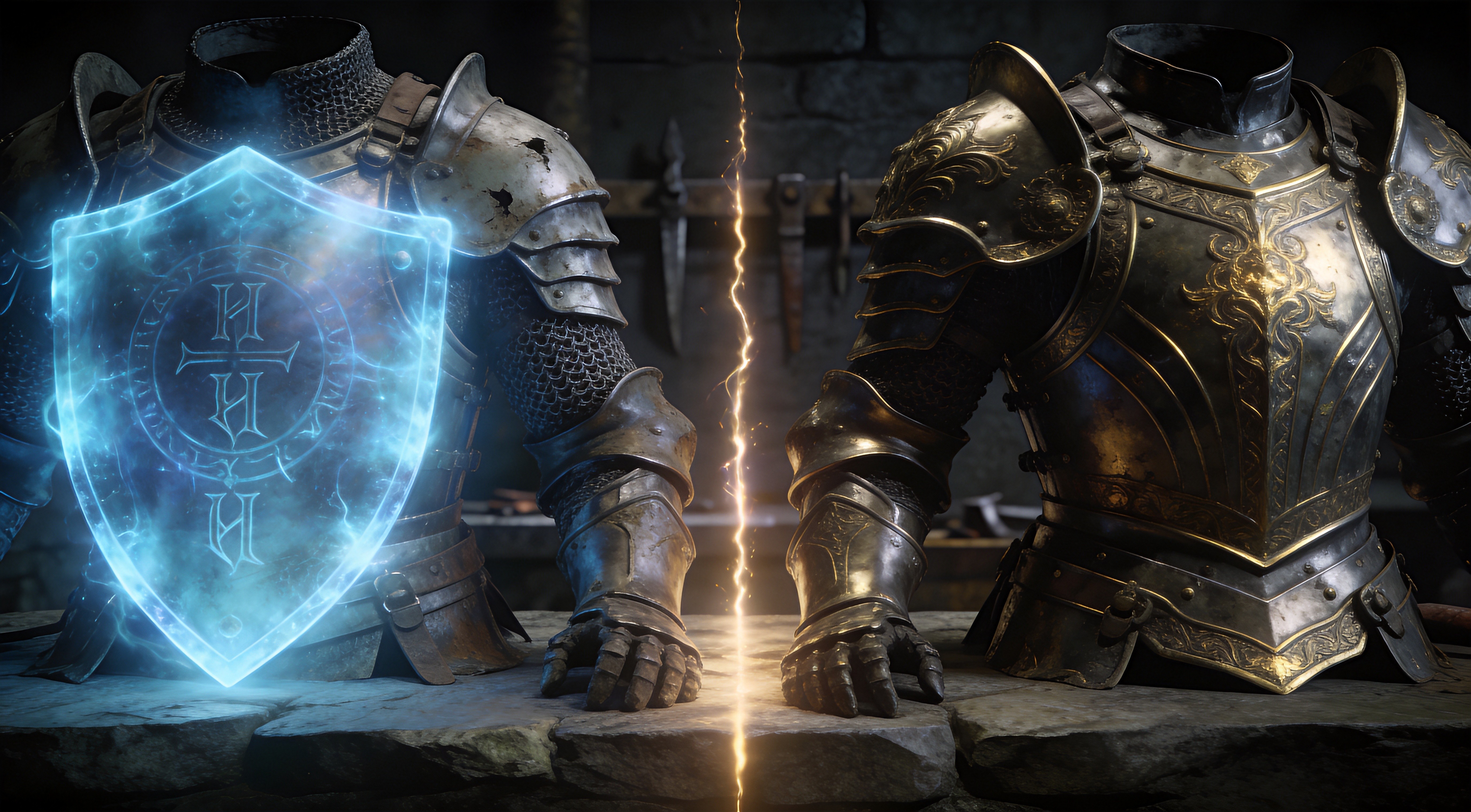
The Item Level 55 Trade-Off: Ward vs Base Defences
This is the decision that defines Runeforging. Official wording: “Armours lower than level 55 gain Runic Ward with no downside. Armours above this level trade some of their regular base defences for Runic Ward.”
| Item Level | What Happens | Verdict |
|---|---|---|
| Below ilvl 55 | Ward added with no stat cost | Pure upside — forge everything |
| At/above ilvl 55 | Part of base Armour/Evasion/ES converts to Ward | Genuine build decision |
Patch 0.5.3 (Jun 19, 2026) softened the trade: “Lowered the amount of defences lost when Runeforging high level non-Unique Armour base types by approximately 20%, the amount of Runic Ward gained remains the same.” Existing items were automatically updated.
Terminology note: the “Defences” keyword no longer exists — the game now says “Armour, Evasion and Energy Shield” explicitly, and these modifiers do not apply to Runic Ward, Resistances, Block, or other protection types.
Practical takeaway: treat Ward as effective HP that regenerates, not flat mitigation. For builds with a high total pool (Life + ES + Ward) and any recovery, the 0.5.3-softened trade-off is often worth it; for paper-thin builds it is a trap. GGG’s “approximately 20%” is an approximation — exact per-base numbers are not published.
Best Armour Slots for Runeforging
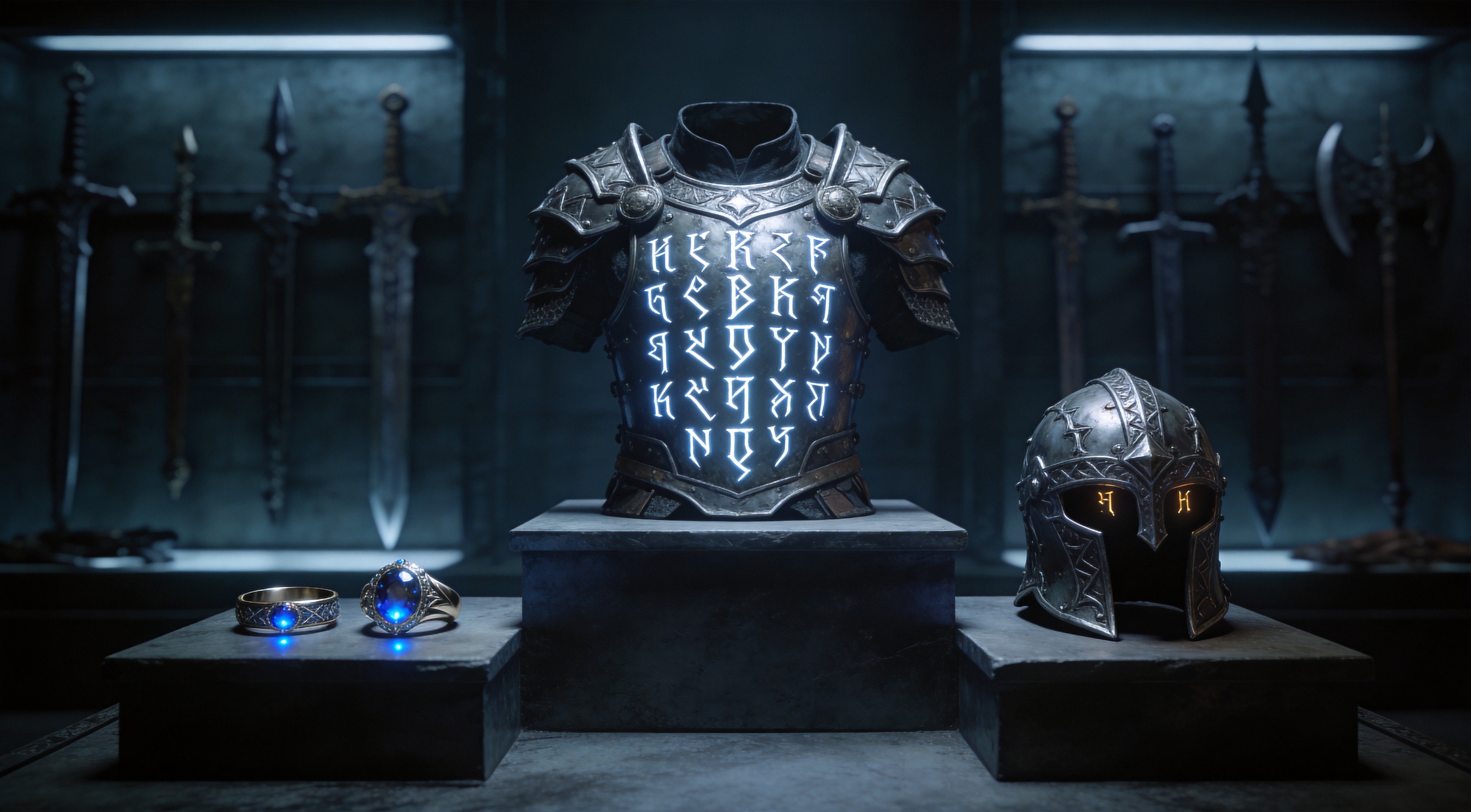
Community consensus is clear: body armour is the highest-impact slot. It carries the largest base Armour/Evasion/ES values, so it converts into the most Runic Ward, and its “trades base defence” cost is proportionally the most efficient trade on the ladder.
| Slot | Why it benefits | Caveat |
|---|---|---|
| Body Armour | Largest base defences → most Ward; 0.5.2 buffed Ward-heavy bases | Above ilvl 55, loses the most raw defence of any slot |
| Helmet | Second-largest defence values; good Ward pool on a budget | — |
| Gloves / Boots | Cheap Ward on lower-defence pieces | Low base values → small Ward totals |
| Shield | Armour/ES bases convert well; pairs with block | Shield-specific trade-off numbers vary by base |
| Jewellery / Belt | Cannot be Runeforged for Ward — use Alloys instead | Ward does not roll on these slots via the Anvil |
Patch 0.5.2 (Jun 12) directly buffed two Ward-relevant bases: a Runemaster-suffixed body base now rolls 725 Armour / 206 ES / 130 Ward (was 210/60/112), and a Runemaster Ancient Guardian shield’s ES jumped to 135 (was 56).
Rule of thumb: forge Ward onto every sub-ilvl-55 armour while levelling (free), and on high-ilvl pieces only when your build has the recovery or total pool to justify trading base defence. Body armour first, helmet second.
Farming Verisium: Ezomyte Remnants, Liquid Verisium & the Economy
The Core Loop — Ezomyte Remnants
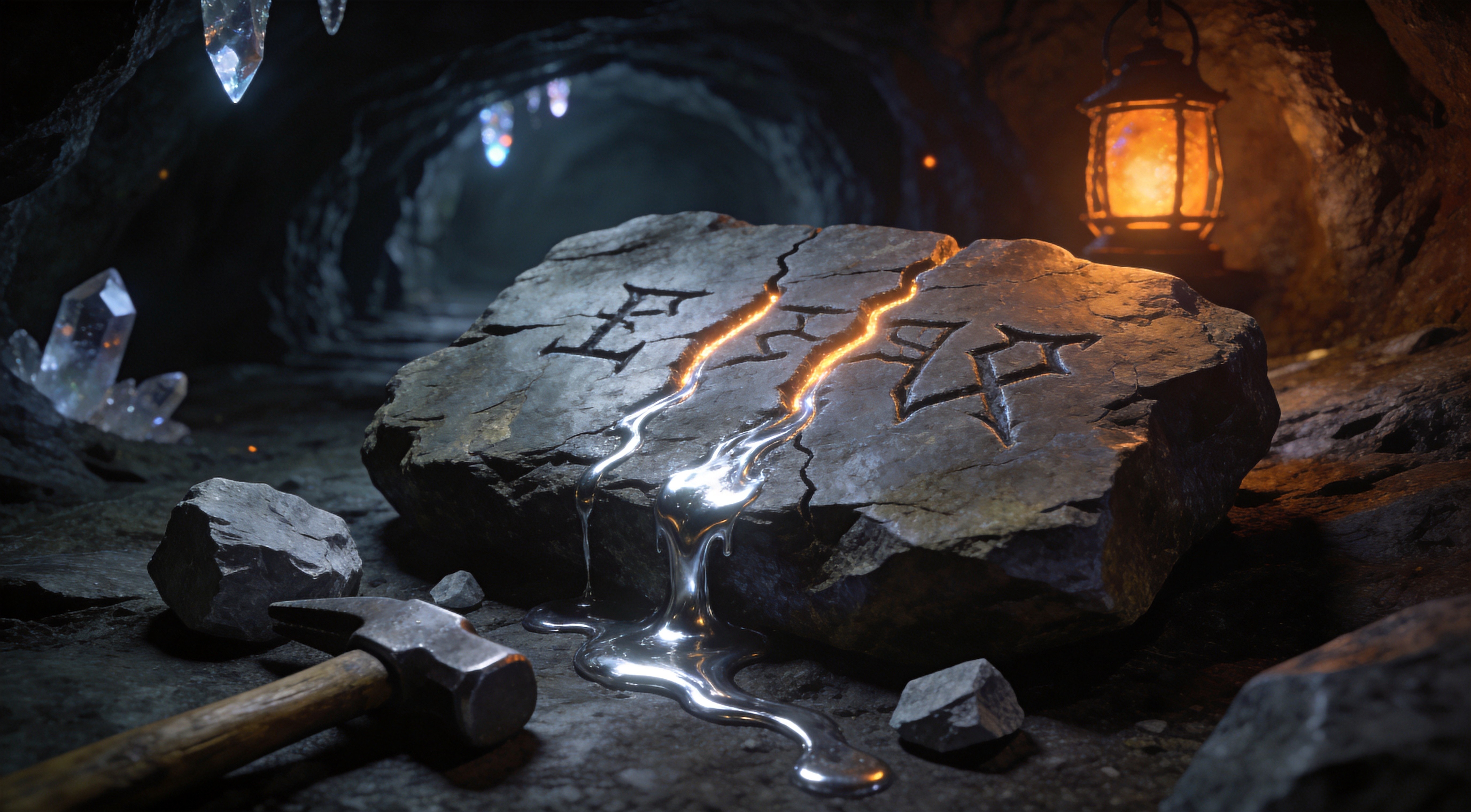
Every area spawns an Ezomyte Remnant (“Verisium Remnant” is the same object under a second name — a frequent source of confusion) with 2–10 runic slots. Each rune slot you fill adds enemy waves and runic modifiers, and the monsters raised by the Remnant drop Verisium. More slots → more waves → more Verisium. Recipes you discover save to your Runebook permanently.
| Remnant size | Rune slots |
|---|---|
| Small | 2–4 |
| Standard | 5–6 |
| Large | 7+ |
| Premium | 8–10 |
Farming Strategy (Community-Consensus)
- Run every Remnant in every map — volume is the base income.
- Prioritise 7+ slot remnants — the best Verisium-per-rune farms.
- Carry cheap runes to fill recipes and maximise triggered waves.
- Stack map density (Breach / Expedition / Delirium) and spec the Runes-of-Aldur Atlas Passive nodes.
- Megaliths gate the jackpots — “Remnants give volume; megaliths give the best rune drops.”
Expedition juicing method (advanced, high-risk): walk the field first, identify the remnant with the most runes (7/8/9 slots), detonate “transfer” remnants first so the final remnant inherits maximum modifiers, reroll weak remnants with Liquid Verisium, then blow the over-juiced final remnant. Juiced runs can claim ~+10 Divines per map — but this is among the hardest content in the game: even 90% evasion / 90% reduction builds die, and dying on a juiced run loses the whole expensive map.
Liquid Verisium (0.5.4) — the Reroll Ticket
Patch 0.5.4 (Jul 02) added Liquid Verisium: “Immediately start a Runic Remnant Encounter with a random Runic Inscription.” It is bought from Farrow using Verisium, after allocating the new “Feeling Lucky?” Expedition Atlas Passive. In practice it is a reroll ticket for slot count / reward type / modifiers — the outcome is still random, and the currency is sellable on the Currency Exchange, so the reroll loop is largely self-funding while mapping.
Cost snapshots (not live prices): Farrow sells it for ~600 raw Verisium; on the Currency Exchange (US realm, 2026-08-25 data) 1 Divine Orb ≈ 23.9 Liquid Verisium, 1 Chaos ≈ 2.45 LV, and ~1,328 Verisium ≈ 1 LV.
Price warning: Verisium and rune prices spike in the first 48–72h of a league or patch, then settle. Historical snapshots ranged from ~956 Verisium per Exalted (Jun 01) to Sovereign Alloy at ~4.7 Exalted and T0 runes (Aldur’s Legacy) quoted anywhere from 30+ to 205 Divine depending on date and market. Treat every number as time-stamped — verify on poe.ninja or poe2db before selling.
Unique Runeforging: Ironbound Warden Bow & Aldur’s Legacy
How Unique Runeforging Works
Unique Verisium Runeforging (unlocked in Act 3) upgrades the base type of unique weapons/armours that drop at levels lower than 55:
- Weapons get higher damage (upgraded base).
- Armours get increased base defences + Runic Ward.
- Unique armours above level 55 can still be Runeforged for Ward, at the cost of reducing other defences.
- Runeforging uniques has additional properties on Kalguuran Uniques.
Crucially, Runeforging does not destroy the unique — it upgrades the base type; the item remains the same unique. But the operation is one-shot: once an item carries the “Runeforged” marker it cannot be re-modified by the same bench, so spend your Crests on uniques you will actually use.
Crests — Adding Modifiers to Uniques
Crests (4 types, stackable ×10) are consumed in unique Runeforging to add new modifiers: Medved’s Crest of the Circle, Vorana’s Crest of the Scythe, Uhtred’s Crest of the Chalice, Olroth’s Crest of the Sun.
Worked example (Skycoach): Runeforged Lace Hood (Radiant Grief) — 35 Verisium adds +35 Runic Ward; adding Vorana’s Crest of the Scythe for 590 Verisium pushes it to +72 Ward plus (30–50)% increased Ignite Magnitude.
Ironbound Warden Bow — the Marquee Example
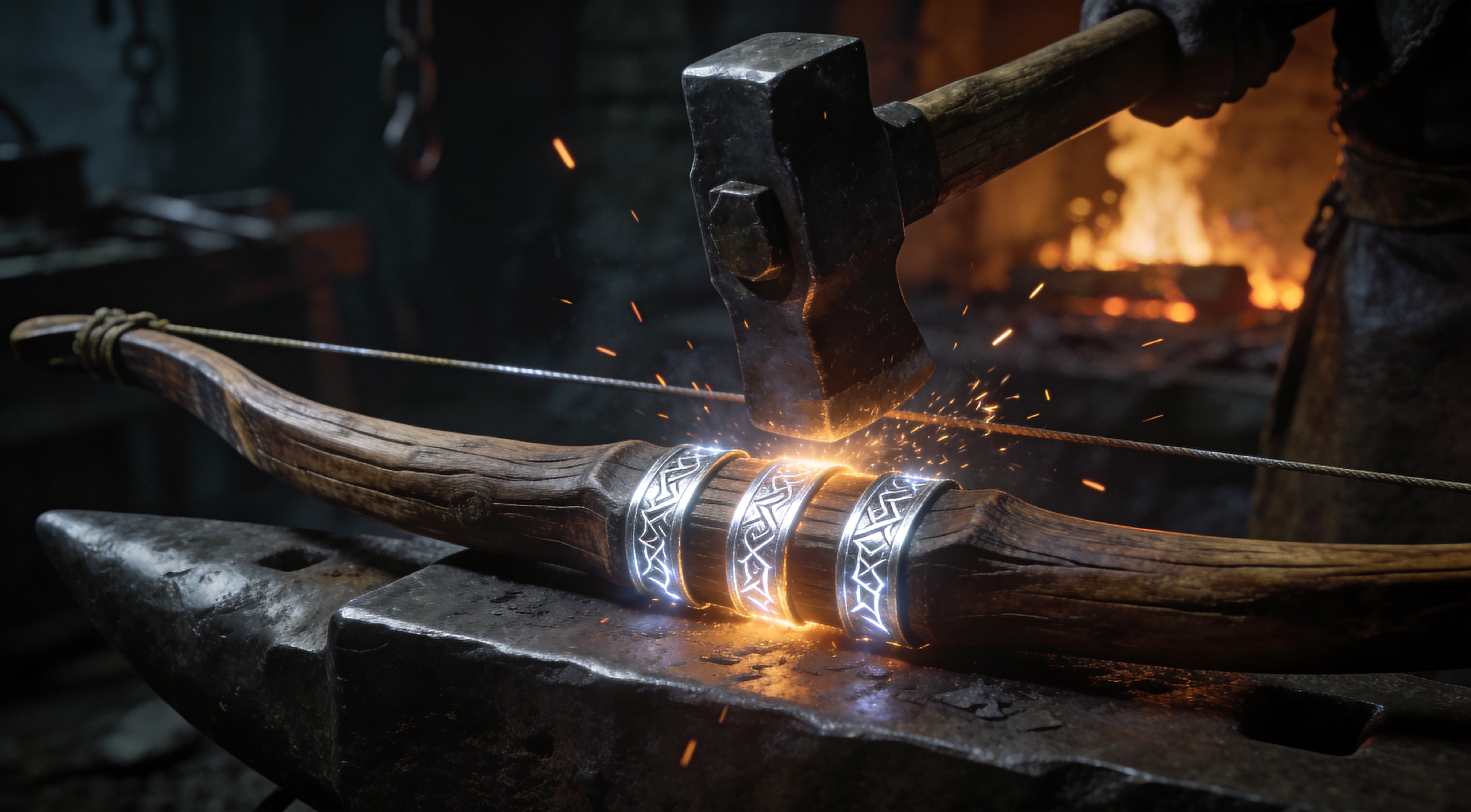
Ironbound Warden Bow (unique bow, new in 0.5) sits on a level-11 Warden Bow base: 25–35% chance to Chain an additional time, +100–150 Armour, attack speed, +12% to Block Chance and block-scaling added Physical Damage. Community crafters rank it a top-5 unique to Runeforge — the upgraded base physical damage is a big DPS gain, especially for Warbringer/Titan builds stacking armour and block. Other frequently recommended targets: Pillar of the Caged God, Widowhail, Doomfletch, Rampart Raptor.
Discrepancy flagged: one database page lists the bow without a Runeforged modifier, which conflicts with the crafting recommendation — treat the recommendation as community opinion and verify in-game before spending a Crest.
Aldur’s Legacy — Destroy a Unique, Keep a Piece of It
Aldur’s Legacy destroys an Ezomyte or Kalguuran unique and extracts one of its modifiers (random) into a socketable rune. The rune only slots into items of the same base class (a bow mod → bows), and some values are scaled down (Quill Rain’s ~100% attack speed may become ~50%). Notable extraction targets: Svalinn (block is lucky), Quill Rain (attack speed), Elevore (charm charge per second), Allelopathy (+1 charm slot).
Alloys, Essences & the One-Crafted-Modifier Rule
Patch 0.5.0 added 13 Runic Alloys (unlocked via Remnant encounters after Farrow’s Act 2 quest). They add guaranteed crafted modifiers to items “by replacing an existing modifier, similar to Perfect Essences.” The rules:
- Use on a Rare item to remove 1 random modifier and replace it with the alloy’s guaranteed one (per item type).
- Each item holds only ONE crafted modifier — Essences, Perfect Essences and Alloys all write into the same single crafted slot.
- Using an Alloy overwrites any existing Essence mod. This is the #1 crafting mistake in the system.
- An item can hold 1 crafted mod + 1 Desecrated mod at the same time — two fully guaranteed modifiers achievable.
Useful alloy examples: Sovereign Alloy — Armour: +(24–30)% increased Runic Ward; Weapons: +(20–30)% increased effect of Socketed Augment Items; Jewellery/Belt: +(20–30)% increased Explicit Resistance Modifier magnitudes. Swift Alloy — Gloves: (8–10)% cast speed; Ring: (7–9)% attack speed; Belt: flask charges per second.

Planning Your Craft Around Runic Ward
Ward is a dual-purpose resource — survival buffer and skill mana. The 23 Kalguuran Skills and 7 Kalguuran Supports (crafted from Remnants) cost Runic Ward instead of Mana and have no attribute/weapon requirements — any class can use any of them. That changes how you budget:
- Decide your Ward budget first. Kalguuran skills spend from the same pool that saves you at 1 Life. Spammy Ward-cost builds need high regen, not just a big pool.
- Stack Ward sources deliberately: Runeforged armour pieces + Sovereign Alloy (+(24–30)% increased Runic Ward on armour) + Ward regeneration/recovery modifiers + the Warding Rune of Nourishment (applies some Life Flask recovery to Ward).
- Regen beats pool size past ~1,500 Ward (community measurement) — prioritise “Runic Ward Regeneration/Recovery Rate” mods over raw pool.
- Budget your crafted slot: Alloy OR Essence — never both. Plan which guaranteed modifier your item really needs.
- Unique upgrades are one-shot decisions — spend Crests on uniques you will actually use.
Common Misunderstandings & Mistakes
| # | Mistake / confusion | Correct understanding |
|---|---|---|
| 1 | ”Runic Ward is like Energy Shield” | Ward is a last-resort pool at 1 Life that regenerates independently; ES works exactly as before |
| 2 | ”Runeforging above ilvl 55 is free” | Above ilvl 55 you trade base defences for Ward; only sub-55 is free (trade softened ~20% in 0.5.3) |
| 3 | ”Kalguuran gems cost Mana” | They cost Runic Ward — Ward is defence and skill resource |
| 4 | ”Verisium Remnant vs Ezomyte Remnant are different” | Same object, two names |
| 5 | ”Alloy stacks with my Essence mod” | No — one crafted modifier per item; Alloy overwrites Essence |
| 6 | ”Fractured mods survive Runeforging” | 0.5.1 hotfix: Runeforging no longer un-Fractures mods |
| 7 | ”Uniques can’t be upgraded” | Unique Runeforging (Act 3) upgrades base types — easily missed because Mystic Refuge is a hidden area |
| 8 | ”Quest unlocks are per-character” | Unlocks are account-wide |
Frequently Asked Questions
Q: Is Runic Ward worth it above item level 55? A: Only if your build has the recovery or total pool to justify it. Treat Ward as effective HP that regenerates, not flat mitigation — for high-pool builds with recovery the 0.5.3-softened trade is often worth it; for paper-thin builds it is a trap.
Q: What is the fastest way to farm Verisium? A: Run every Ezomyte Remnant in every map, prioritise 7+ slot remnants, stack map density and Runes-of-Aldur Atlas passives. Liquid Verisium (0.5.4) lets you reroll weak remnants for slot count.
Q: Can I Runeforge my unique and keep it? A: Yes — unique Runeforging upgrades the base type and does not destroy the item. The operation is one-shot, so choose carefully and use Crests on uniques you will actually play.
Q: What happens to Verisium prices when 0.5.5 launches? A: 0.5.5 is expected to bring a fresh event-league economy (community estimate: early-to-mid September 2026). Every price in this guide is a time-stamped snapshot and will go stale after the reset.
Q: Do I need Ward for Kalguuran skills? A: Yes — the 23 Kalguuran Skills and 7 Supports cost Ward instead of Mana. If you want to play that system, Ward planning (pool + regen) is mandatory, not optional.
Summary
Verisium Runeforging is PoE2’s second health pool: forge Runic Ward onto armour at the Verisium Anvil using Verisium earned from Ezomyte Remnant encounters. The decision that matters most is the ilvl 55 threshold — below it Runeforging is free upside, above it you trade base defences for a regenerating buffer (softened ~20% in 0.5.3). Body armour first, helmet second. Farm every Remnant, prioritise 7+ slot ones, and use Liquid Verisium to reroll weak encounters. For uniques, Act 3’s hidden Mystic Refuge chain unlocks base-type upgrades — Ironbound Warden Bow is the marquee example — and Aldur’s Legacy lets you destroy a unique to keep a piece of its power. Respect the one-crafted-modifier rule (Alloys overwrite Essences), remember Ward is defence and resource, and treat all price data as snapshots: the 0.5.5 economy reset is coming.
Was this guide helpful?
Help us improve PoE2Path with your feedback.